Nikki assumed she had the flu. In 2010, at age 35, she started not feeling well. She went to urgent care, and after reviewing her blood test, a doctor walked in and asked her if she knew she was diabetic. Nikki remembers thinking, “No, wrong patient. That's not me … I was 106 pounds. I was an athlete. I thought it was a lifestyle disease. I really thought this was all a big mistake.”
An endocrinologist confirmed type 1 diabetes. For a while, Nikki was able to manage it, but then she explains, “It started getting to the point where I noticed I wasn't having symptoms when my blood sugar went low.” Furthermore, her continuous glucose monitor (CGM) was no longer accurate. Nikki and her doctor tried a number of changes, but she was diagnosed with hypoglycemia unawareness.
Then, an especially scary event happened while Nikki was grocery shopping. “I was pushing the cart along, and I started feeling something, and I thought, "Okay, if I'm at the point of feeling something, I'm really low because I don't have symptoms at any safe blood sugar level.” Her CGM showed 42. Anything under 70 is considered dangerous. So, she ate all the glucose tabs she had with her and rested a bit. When she considered going home, her vision became blurry and she began sweating. She proceeded to lower herself to the ground, hanging onto her cart, and a paramedic who happened to be shopping near her jumped into action, getting her the help she needed for her blood sugar level, which was now at 30. Nikki says, “I just cried because I thought, "This is going to kill me. Even though I'm doing everything I can to be safe, I'm checking my blood sugar. I'm checking with finger pokes, but these low blood sugars are happening fast. There's just no warning.”
Already knowing someone who has a Can Do Canines Diabetes Assist Dog, Nikki says it was almost an immediate response upon returning from the grocery store when she applied for her own dog.
 While waiting, she followed Can Do Canines on Instagram and watched some of the dogs in final training featured there. “When I saw Pixie,” she says, “I thought, ‘That's my dog.’ … because I just instantly saw her, and I felt like she's mine. I had this connection to her.”
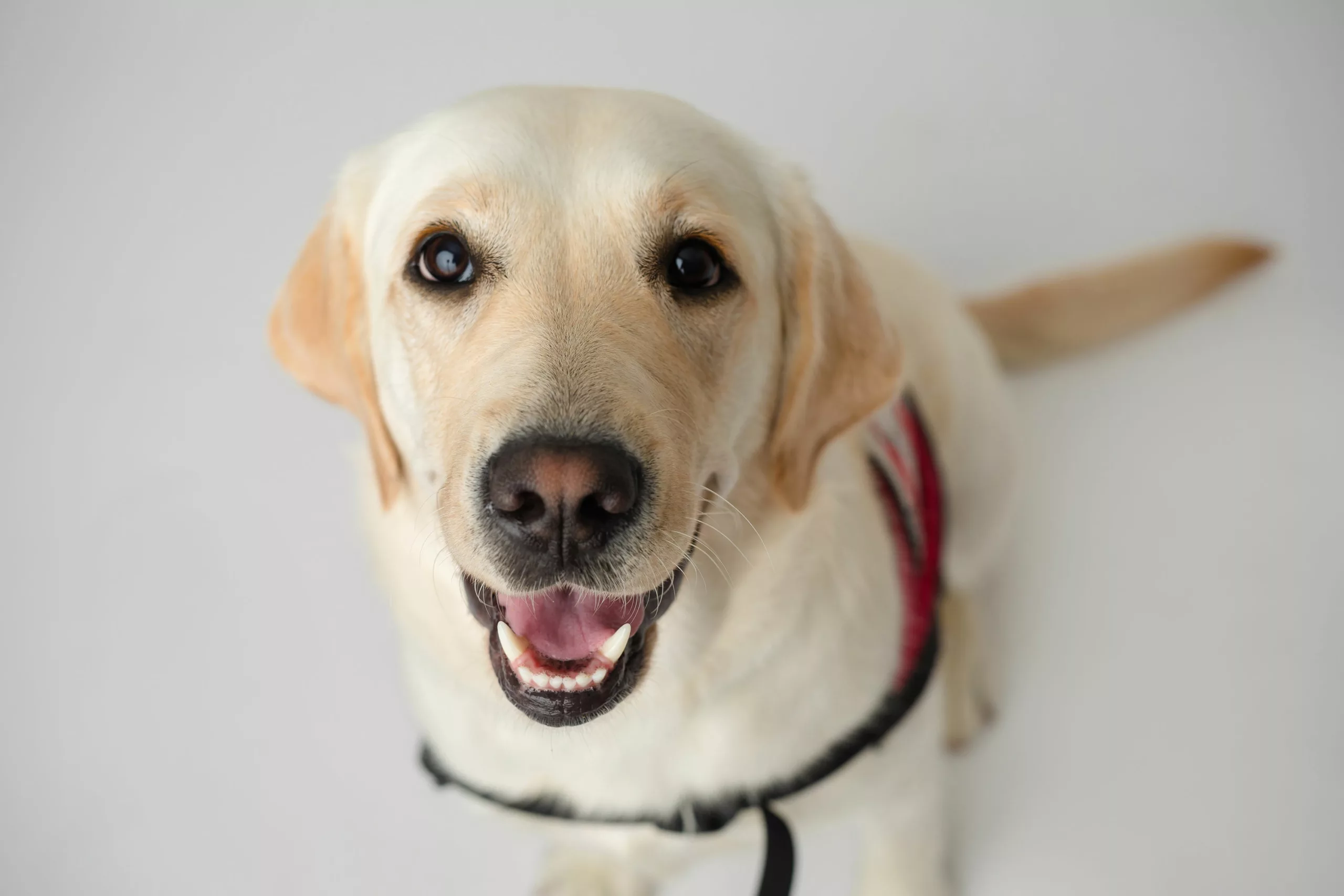
Nikki was correct. Pixie—a black Lab, often mistaken for a young dog due to her small size—became her Diabetes Assist Dog, making them Can Do Canines’ 1,000th team. How does she feel about representing this milestone? “It was an instant ‘yes’ because Pixie is a rock star and she deserves the spotlight. I'm beyond excited to represent Team 1,000.”
Her “rock star” has several ways she helps out, one being a response to Nikki saying, “Help.” At those times, Pixie runs to a designated button in Nikki’s home. The button is connected to Nikki’s phone, which calls a loved one to play a pre-recorded message from Nikki, alerting them that she is experiencing a blood sugar episode. Also, Nikki explains, “If I say the word ‘bag,’ she will run and bring me my medical bag that has my testing kit that is always in the same place on my living room end table.” And Pixie’s alerts are off the charts. “The last one I had, I think my CGM said I was like 88, but on a finger stick—because she alerted me—it said I was 52. It was 36 points off. If she hadn't caught that [from another room], I could have ended up in a very dangerous blood sugar range.”
“Having her has been a blessing,” shares Nikki. “It takes a little bit of the diabetes responsibility off you to constantly be thinking about it 24/7 to have somebody there that's also keeping an eye on you and actually is more reliable than your equipment to catch your low blood sugars.” Nikki reports great peace of mind not only for herself but also for her partner, who travels frequently, and for her family members, who worry about her.
“I'm an animal person to begin with, but then you give me this precious being that is actually keeping me safe; my love level is so much higher. I just can't imagine living without her.”
Thank you to all those who made this partnership possible:
Whelping Home — Kim Diekmann
Raisers — Missy Nervick
Special Thanks — Federal Prison Camp-Duluth, Jackson Correctional Institution, Stanley Correctional Institution, University of Minnesota FETCH Program (Charlotte Krueger, Erin Martin, Jordan Schultz)
Name-A-Puppy Sponsor — Barbi McCoy
 Volunteers Keep PAW Program Moving Forward
 Contact Us
 Location